Planning a corporate retreat starts with five key decisions: your retreat objectives, budget, date and duration, venue, and activity mix. Once these are decided, the rest of the planning process becomes much easier.
For corporate retreat planning in Singapore, begin by deciding what you want the team to achieve. Then set a realistic budget, choose a date that works for most participants and find a venue that suits your group size and programme. Finally, select activities that support your objectives rather than simply filling the schedule with games.
Once these five areas are clear, you can move on to catering, transport, team communication and feedback. Use the step-by-step corporate offsite checklist below to plan each stage without missing important details.
Setting Retreat Objectives
To begin with, determine what you want to achieve through the retreat. Your objectives should guide your decisions when choosing the venue, activities, duration and overall format of the retreat.
For instance, you may want to improve communication among employees, build trust, introduce new team members or address specific business challenges. The retreat may also focus on strategic planning, leadership development or strengthening team relationships.
Make your objectives as specific as possible by clearly defining the outcomes you expect. Instead of simply aiming to improve teamwork, identify how you want it to improve, such as strengthening communication between departments or helping colleagues feel more comfortable working together.
If you are learning how to plan a company retreat, setting clear objectives should always come first. Your goals will guide your choice of venue, activities, schedule and overall retreat format.
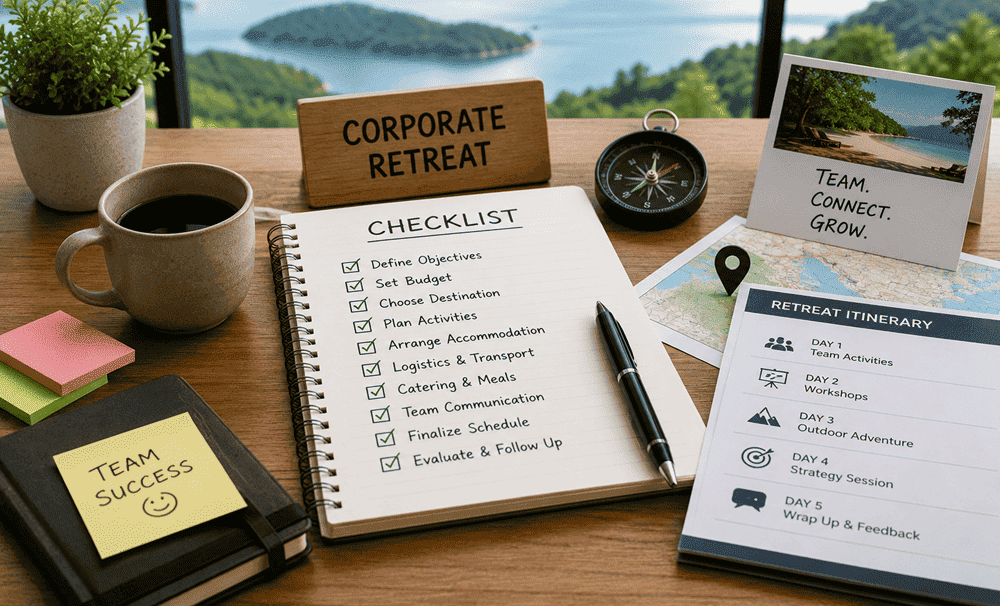
The Corporate Retreat Planning Checklist
A clear corporate offsite checklist keeps the planning process on track and helps you avoid last-minute problems. Work through these seven stages in order, from securing approval to reviewing the results.
1. Get Budget Approval
Set and approve the total budget before booking anything.
Start by identifying the main costs, including venue hire, activities, food, transport, equipment and accommodation where required. It is also wise to set aside some contingency funds for unexpected expenses.
Establishing a budget per participant can also make it easier to compare different venues and activity packages. Most importantly, decide where your budget will have the greatest impact. Depending on your objectives, the venue and quality of the activities may be worth prioritising over less important extras.
2. Choose the Right Venue
Choose a venue that suits your team size, retreat objectives and planned activities.
For corporate retreat planning in Singapore, location can make a significant difference. A venue that is easy to reach can reduce travel time and help the programme begin on schedule.
Check the venue’s capacity, meeting rooms, seating arrangements, Wi-Fi and AV equipment before booking. If you are planning outdoor activities, ask whether there is a suitable indoor backup space. Also consider accessibility, parking and nearby public transport so that everyone can attend comfortably.
3. Set the Date and Duration
Choose a date that works for the team and allows enough time to achieve your retreat objectives.
Avoid particularly busy work periods, major deadlines and dates when key team members are unavailable. Give employees sufficient notice so they can plan their workload and personal commitments accordingly.
Next, decide how long the retreat should last. A half-day session may be suitable for a focused workshop, while a full-day retreat provides more time for activities, discussions and breaks. For more detailed strategy or planning work, you may need to extend the retreat over two or more days.
4. Plan the Activity Mix
Choose activities that support your objectives while keeping the day engaging.
Avoid filling the programme with only one type of activity. Instead, combine team activities with discussions, workshops and sufficient breaks throughout the day.
For example, you could begin with a short group activity, followed by a planning session, and end with a relaxed team-building activity. This approach can help maintain engagement while giving participants enough time to rest and recharge.
Most importantly, every activity should have a clear purpose. If an activity does not support any of your retreat objectives, consider removing it from the programme.
5. Arrange Catering and Logistics
Plan food, transport and other practical details early to help the retreat run smoothly.
Ask about dietary requirements before finalising the menu. Make sure suitable options are available for different dietary needs and that participants have access to plenty of drinking water throughout the day.
Next, plan the transport arrangements for getting to and from the venue. This may include sharing information about company transport, public transport options and parking arrangements.
Finally, confirm the equipment, room set-up and materials needed for activities and discussions. For off-site retreats, prepare a contingency plan in case of bad weather or other unexpected disruptions.
6. Create a Communication Plan
Give employees clear information about what to expect before the retreat.
Start by sending a save-the-date notice once the date and venue have been confirmed. Then provide key information such as arrival time, venue location, dress code and anything participants need to bring.
Send the full schedule closer to the event date. However, you do not need to reveal every detail of the planned activities, especially if an element of surprise will make the experience more engaging.
It is also important to explain why the retreat is being organised. Understanding its purpose can help employees prepare to participate meaningfully rather than viewing it as simply another day away from the office.
7. Collect Feedback After the Retreat
Ask for feedback while the experience is still fresh in everyone’s mind.
Send a short survey after the retreat and keep the questions practical and relevant. Ask participants what they enjoyed, how the sessions benefited them and what could be improved for future events.
Compare the feedback with your original objectives. For example, if your aim was to improve communication, ask whether participants felt more comfortable working with colleagues from different departments.
Use the feedback to identify lessons and improve future retreats. This turns the feedback process into an important part of long-term corporate retreat planning.
Choosing the Right Activity Mix
When exploring team retreat ideas in Singapore, choose activities that match your goals, keep the team engaged and give everyone a chance to take part. The right mix should balance teamwork, interaction and enough time to relax.
- Match activities to your goals: For instance, if improving communication is one of your goals, choose activities that involve listening, sharing ideas and solving problems together.
- Mix active and relaxed sessions: Follow energetic activities with workshops, discussions or rest periods. This helps participants stay engaged without becoming overly tired.
- Make activities inclusive: Consider participants’ fitness levels, ages, mobility needs and different personalities when selecting activities.
- Think about your group size: Some activities work better for smaller teams, while others are more suitable for larger groups.
- Leave room for informal bonding: Do not schedule every minute of the retreat. Give colleagues time during coffee breaks or meals to talk and connect without a specific task.
- Choose activities with a clear purpose: A fun game becomes more valuable when it supports a goal, such as building trust or improving problem-solving. You can also explore our team building programs for more structured activities.
A balanced programme provides enough variety without making the retreat feel rushed. When each activity has a clear purpose, the team is more likely to enjoy the experience and take something useful back to the workplace.
Common Planning Mistakes to Avoid
Even a well-funded corporate retreat can fall flat when a few basic details are overlooked. Watch out for these common mistakes during the planning process:
- Planning without clear goals: Choosing a venue or activities before defining your objectives may result in an enjoyable but unproductive retreat.
- Packing too much into the schedule: Back-to-back activities can leave participants tired. Allow enough time for breaks, meals and informal conversations.
- Choosing activities that exclude people: Consider fitness levels, accessibility and participants’ interests. The best activities should allow as many people as possible to take part.
- Ignoring travel time: A venue that is difficult to reach can lead to late arrivals and frustration. Consider transport links and travel time when choosing the location.
- Forgetting a backup plan: Singapore’s weather can change quickly. If you are planning outdoor activities, prepare a suitable indoor alternative.
- Giving employees too little information: Share important details such as the time, venue, dress code and anything participants need to bring.
- Choosing a workshop only because it sounds fun: Consider what participants will learn and whether the activity supports your retreat objectives. To learn more, explore our team bonding workshop selection guide.
- Skipping the follow-up: Ask for feedback and review whether the retreat met its goals. Without this step, it becomes more difficult to improve future events.
Avoiding these mistakes helps keep the retreat focused without making the planning process unnecessarily complicated. More importantly, it can create an experience that feels worthwhile for both employees and the business.
Conclusion
Successful corporate retreat planning in Singapore requires the right balance of preparation, structure and flexibility. Start by setting clear goals, confirming your budget and dates, and choosing a venue that supports what you want the retreat to achieve.
Then plan the other details that shape the overall experience. Catering, transport, clear communication and sufficient breaks can be just as important as the main activities.
Most importantly, do not try to squeeze too many activities into a single day. Give people enough time to talk, exchange ideas and build relationships. When every part of the retreat serves a clear purpose, you can create a productive and enjoyable experience away from the usual workplace.
Plan a Retreat That Brings Your Team Together
Turn your next corporate retreat into an experience that builds stronger connections and creates lasting value. EKA Team Building can help you plan activities that fit your goals, team size and budget.